
Equipment
Buying guide: diving clothing
Rash guards and UV tops, undersuits, drysuit undergarments, changing robes and boat coats: what they are for, how to choose them and a few manufacturers.
For information only: it replaces neither training supervised by a qualified instructor nor medical advice.
In short
Around your suit, a few items of clothing make a diving day more comfortable: a rash guard or UV top in warm water, an undersuit for extra warmth, an insulating undergarment under a drysuit, and surface wear (changing robe, boat coat) to stay warm between dives. They are inexpensive compared with the rest of your equipment and save you a lot of shivering.
Why it matters
Diving does not stop when you leave the water. The boat ride, wind on wet skin and the surface interval between two dives cool you down more than the dive itself. In warm water, on the other hand, the sun quickly burns wet skin. Suitable clothing helps you stay fit for the next dive.
Diving clothing and wear
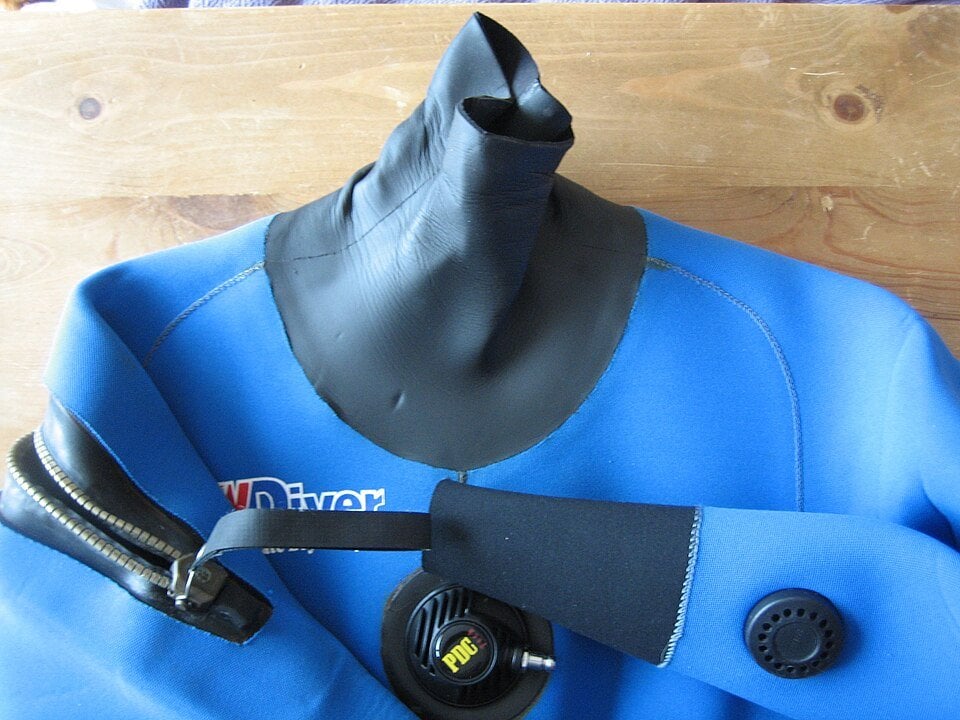
Clothing worn in the water
| Garment | Use | Pros | Cons |
|---|---|---|---|
| Lycra / UV suit | Warm water, snorkelling, under a wetsuit | Protects from the sun and chafing, makes it easier to put on a wetsuit | No thermal insulation |
| Thin neoprene top or shorts (0.5 to 2 mm) | Layer under a wetsuit | Extra warmth on the torso, without restricting movement | Adds a little buoyancy, so more weight |
| Thermal undersuit (fleece-lined, technical fabric) | Under a wetsuit, or on its own in very warm water | Dries quickly, comfortable | Limited protection on its own |
| Drysuit undergarment | Under a drysuit | Insulation adjustable to the temperature | Must stay dry; thickness to take into account when sizing the drysuit |
Under a drysuit
- A breathable base layer (merino wool or synthetic) that wicks away sweat.
- An insulating undergarment: thin fleece for temperate water, thick quilted undergarment for cold water.
- Warm socks and, in very cold water, an electric heating system offered by some manufacturers (specific training and checks).
- Avoid cotton: once wet with sweat or a leak, it no longer insulates.
Surface wear
| Garment | Use | Selection tips |
|---|---|---|
| Towelling or microfibre changing robe | Changing on the boat or the beach, drying off | Long enough to change under cover, hood, inside pocket |
| Parka or boat coat | Windproof and warm, worn straight over a wet suit | Windproof and waterproof outer, fleece lining, can be worn wet |
| Beanie, cap, sunglasses | Between dives | A cap and sunglasses protect your eyes from glare |
| Deck shoes | Boat and quay | Non-slip sole, quick-drying |
After the dive, take off your wet suit as soon as possible, dry yourself and cover up. Wind on a wet suit cools you down very fast, even in summer.
Choosing well
- Size: clothing worn under the suit must stay thin and close-fitting; a layer that is too thick makes the suit too tight.
- Materials: choose fabrics that dry quickly and stay warm when wet.
- Sun protection: a high textile UV protection factor (UPF) protects better than sunscreen, which pollutes the water.
- Weights: a neoprene layer or a thicker undergarment changes your buoyancy; redo your weight check.
A few manufacturers
Non-exhaustive list, in alphabetical order, with no ranking and no sponsored link. Generalist manufacturers offer rash guards, tops and changing robes; thermal protection specialists also offer drysuit undergarments and boat coats. Check their current range on their website.
| Manufacturer | Official website | Range |
|---|---|---|
| Aqualung | aqualung.com | Generalist |
| Bare | baresports.com | Specialist |
| Beuchat | beuchat.fr | Generalist |
| Cressi | cressi.com | Generalist |
| Fourth Element | fourthelement.com | Specialist |
| Mares | mares.com | Generalist |
| Santi | santidiving.com | Specialist |
| Scubapro | scubapro.com | Generalist |
| Seac | seacsub.com | Generalist |
| Waterproof | waterproof.eu | Specialist |
Key takeaways
- A UV rash guard protects you from the sun in warm water and makes it easier to put on your wetsuit.
- A thin layer under your suit adds warmth; redo your weight check.
- Under a drysuit: a breathable base layer and suitable insulation, never cotton.
- A changing robe and a boat coat keep you warm between dives.
Further reading
The wetsuit buying guide and the thermal protection guide explain how to choose your protection according to the temperature. The boat bag guide helps you not to forget anything.
Sources
- DAN Europe – Divers Alert Network Europe (diver health and safety) · consulted on 9 November 2026
- FFESSM – French Federation for Underwater Studies and Sports · consulted on 9 November 2026
Related guides
Buying guides: getting equipped to dive
Where to start, buying or renting, trying on, new or used, budget and maintenance: the method shared by all the diving equipment buying guides.
Buying guide: wetsuit, gloves and boots
Wetsuit, semi-dry or drysuit, thickness, size, boots, gloves and hood: types, pros, cons and manufacturers.
Exposure suits and thermal protection
Why you get cold underwater, wet, semi-dry and dry suits, accessories, effect on weighting and what to do when you feel cold.
Buying guide: boat bag
Backpack, mesh deck bag, dry bag, wheeled bag and crate: types, pros, cons, what to pack and manufacturers.