
Equipment
Buying guide: boat bag
Backpack, mesh deck bag, dry bag, wheeled bag and crate: types, pros, cons, what to pack and manufacturers.
For information only: it replaces neither training supervised by a qualified instructor nor medical advice.
In short
On a dive boat, space is limited, the deck is wet and everyone kits up at the same time. A good bag protects your equipment, fits under a bench and lets you find each item without emptying everything. Many divers combine two bags: a large, robust bag for wet equipment, and a small dry bag for dry clothes and fragile items.
Why it matters
Equipment left ashore means a cancelled dive; equipment lying around on deck means a fall or a trampled regulator. An organised bag speeds up kitting up, prevents forgotten items and keeps dry what needs to stay dry (phone, documents, warm clothes).
Equipment and boat bag
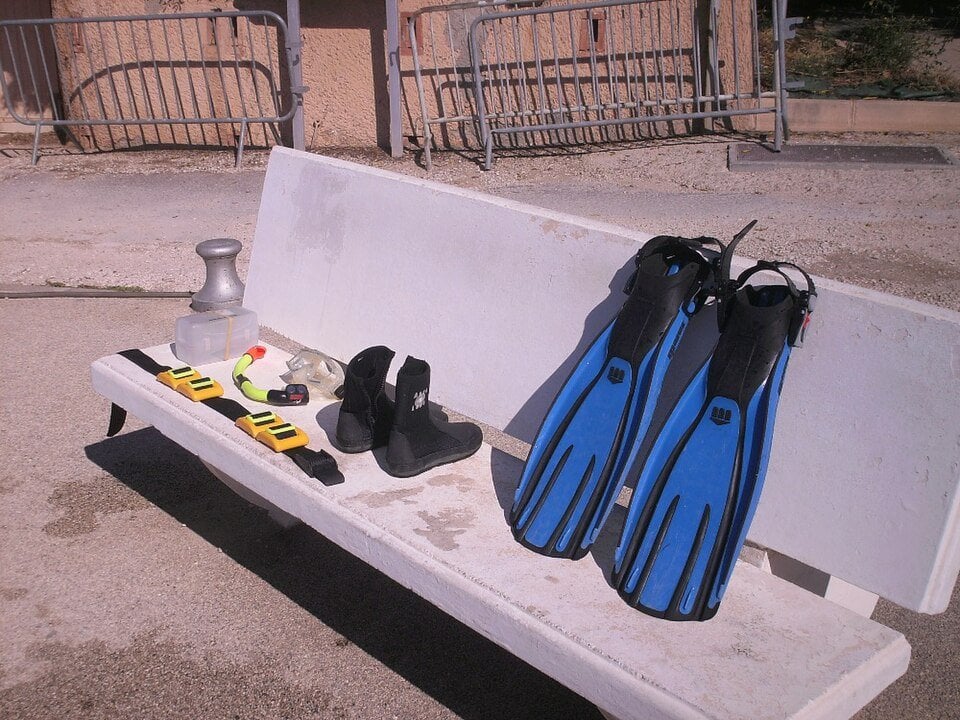
Bag types
| Type | Advantages | Disadvantages |
|---|---|---|
| Mesh deck bag | Light, dries quickly, water drains out; equipment can be rinsed in the bag | Does not protect against knocks or dust; everything is visible |
| Diving backpack | Hands free on docks and ladders, compartments | Limited volume, not well suited to the BCD and long fins |
| Large duffel bag | Large volume, robust, coated fabric | Heavy to carry when full, dries slowly |
| Wheeled bag | Ideal for travel and on docks, protects equipment | Heavy when empty; wheels useless on sand and on deck |
| Dry bag (roll-top) | Keeps clothes, documents and electronics dry | Not suitable for wet equipment |
| Plastic crate | Robust, easy to clean, stackable | Bulky, often refused on small boats |
Selection criteria
- Size suited to the boat: ask the dive centre or club how much space is available; large crates are rarely welcome.
- Materials: coated fabric or tarpaulin resistant to salt water, plastic zips (they do not rust), drainage eyelets.
- Compartments: a separate pocket for the regulator and dive computer prevents knocks; a ventilated pocket for wet fins and boots.
- Carrying: padded shoulder straps, strong handles to pass the bag from the dock to the boat.
- Identification: distinctive colour or tag, name and phone number.
What to pack
| In the water | On the boat, kept dry |
|---|---|
| Mask (and spare mask), snorkel | Towel or poncho, warm clothes, windbreaker |
| Fins, boots | Drinking water, snacks, sun protection (cap, sunglasses, reef-friendly sunscreen) |
| Wetsuit, hood, gloves | Certification card, medical certificate, logbook |
| BCD, regulator, dive computer | Personal medication, seasickness treatment as advised by your doctor |
| Weights, DSMB, line cutter, light | Phone and documents in a dry bag |
| Spares kit: O-rings, mask strap, anti-fog, cable ties, regulator wrench |
Pack your bag the day before with a list, always in the same order: what you will use last at the bottom, the mask and dive computer on top.
On the boat
- Stow the bag where the crew tells you, closed, leaving nothing lying around on deck.
- Keep within reach what you will need during the trip (water, warm clothes, sun protection).
- After the dive, put the wet equipment in the mesh bag and the dry items in the dry bag.
- Ashore, empty the bag and rinse the equipment in fresh water, then leave the bag open to dry.
Some manufacturers
Non-exhaustive list, in alphabetical order, with no ranking and no sponsored or affiliate links. Most general manufacturers offer diving bags; check the current range on their website.
| Manufacturer | Official website |
|---|---|
| Aqualung | aqualung.com |
| Beuchat | beuchat.fr |
| Cressi | cressi.com |
| Mares | mares.com |
| Scubapro | scubapro.com |
| Seac | seacsub.com |
| Tusa | tusa.com |
Key takeaways
- A bag suited to the space available on the boat, resistant to salt water.
- A mesh bag for wet equipment, a dry bag for dry items.
- A list prepared the day before prevents forgotten items.
- Nothing lies around on deck: the bag stays closed and stowed.
Further reading
The guides on water entry and on briefings describe how a boat dive unfolds. The diving clothing guide helps you choose what to wear at the surface.
Sources
- FFESSM – French Federation for Underwater Studies and Sports · consulted on 9 November 2026
- French Ministry of the Sea – Maritime surveillance and rescue · consulted on 9 November 2026
Related guides
Buying guides: getting equipped to dive
Where to start, buying or renting, trying on, new or used, budget and maintenance: the method shared by all the diving equipment buying guides.
Water entry, step by step
Prepare your equipment, do a buddy check, choose the right entry technique, descend gently and get out of the water safely.
Briefing and debriefing
What the dive leader's and the guide's briefings contain, what each diver should say, and how to debrief a dive.
Buying guide: diving clothing
Rash guards and UV tops, undersuits, drysuit undergarments, changing robes and boat coats: what they are for, how to choose them and a few manufacturers.
Equipment care and storage
Rinsing, drying, periodic servicing, cylinder inspections and club equipment: keeping your gear reliable.