
Equipment
Buying guide: BCD
Jacket BCD, back-inflation, wing or sidemount, travel BCD: types, pros, cons, size, integrated weights and manufacturers.
For information only: it replaces neither training supervised by a qualified instructor nor medical advice.
In short
The buoyancy control device (BCD, gilet stabilisateur or stab in French) carries the cylinder, lets you adjust your buoyancy underwater and keeps you afloat at the surface. There are three main families: the jacket BCD, the back-inflation BCD and the wing on a harness, plus sidemount configurations. The choice depends on your diving, your build and your preferences: try several rental models before buying.
Why it matters
A well-fitting BCD holds the cylinder in place, lets you breathe freely and helps you keep a stable horizontal position. A BCD that is too big lets the cylinder slide; one that is too small squeezes your chest. The controls (power inflator, dump valves) must be found without searching, even with gloves.
BCDs
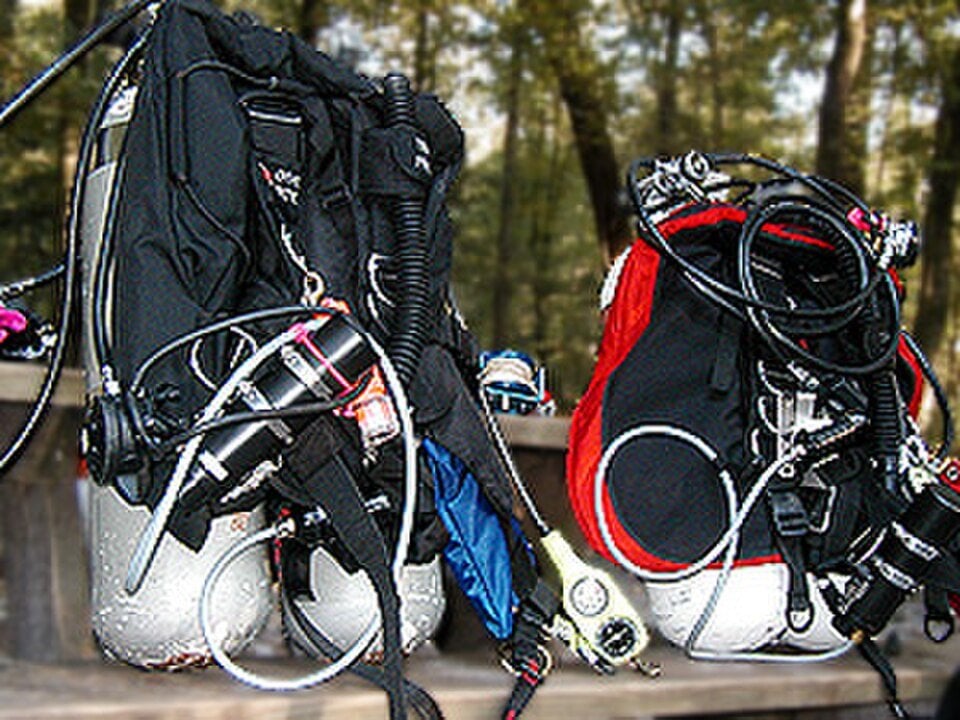
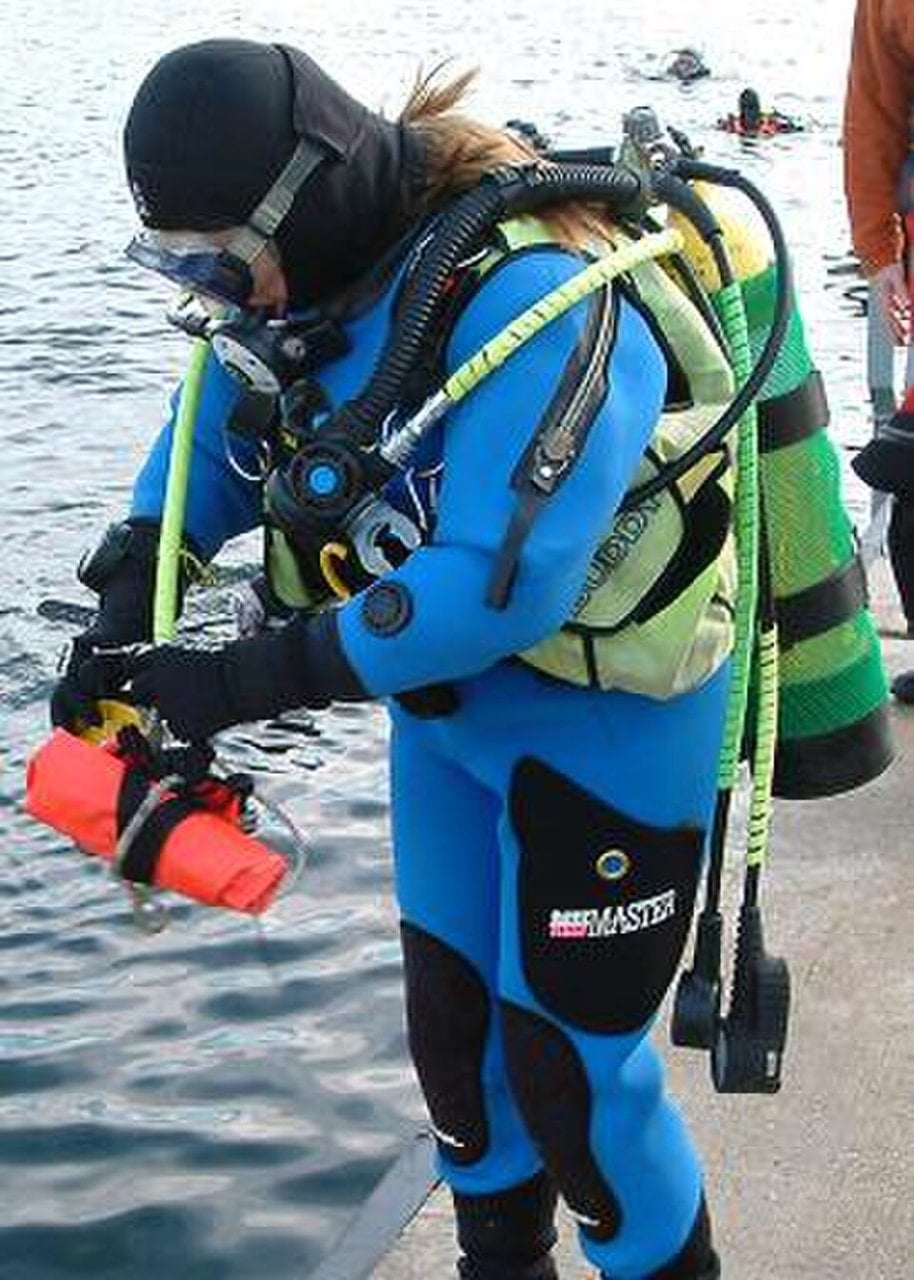
Types of BCDs
| Type | Pros | Cons |
|---|---|---|
| Jacket | Intuitive, stable at the surface, the most common in training and rental | Squeezes the chest when inflated; tends to push the diver upright underwater |
| Back-inflation | Easier horizontal trim, chest free, a good compromise for recreational diving | Pushes your face forward at the surface if over-inflated |
| Wing on harness (backplate) | Modular, sturdy, suited to twin cylinders and technical diving | Longer to set up, harness to adjust yourself, heavier |
| Sidemount | Cylinders carried on the sides: access to the valves, streamlined profile | Specific training; configuration specific to each diver |
| Travel (light, foldable) | Light and compact in your suitcase | Fewer pockets and less lift; sometimes less durable |
Selection criteria
- Size and adjustment: adjustable shoulder and waist straps; some models come in a women's cut. Try it on with your usual suit and a cylinder.
- Lift: it must compensate for your equipment and your weighting. A BCD with too much volume does not help: it is bulkier and harder to dump.
- Integrated weights: quick-release pockets that replace the weight belt. Check that the release system is easy to operate with one hand, and that the weights stay distributed for good trim.
- Controls: power inflator easy to grab, quick dump valves reachable in vertical and horizontal positions, a low dump valve for head-down positions.
- Storage: stainless steel D-rings, pockets for the surface marker buoy and the spare mask.
- Material: a thick fabric resists rubbing on the boat better; a thin fabric is lighter for travel.
- Compatibility: the cylinder strap must fit the diameters of the cylinders you use.
The power inflator connects to the regulator with a standard low-pressure hose. For autonomous or boat diving, check with your club or dive centre what equipment is required (BCD, inflation system, alternate air source).
Wing or jacket: how to decide
- You dive recreationally, with a single cylinder, and want simple equipment: jacket or back-inflation BCD.
- You want to move towards technical diving, twin cylinders or long configurations: wing on a harness, after trying it with an instructor.
- Sidemount cannot be improvised: you learn it on a dedicated course.
New or used
A used BCD can be a good deal if it is checked: airtight bladder (inflate it and leave it overnight), working power inflator and dump valves, straps and buckles in good condition, no salt or mould inside. Have the inflator serviced by a workshop if in doubt.
A few manufacturers
Non-exhaustive list, in alphabetical order, with no ranking and no sponsored link. Generalist manufacturers offer jacket and back-inflation BCDs; wing and sidemount specialists also offer modular harnesses. Check their current range on their website.
| Manufacturer | Official website | Range |
|---|---|---|
| Apeks | apeksdiving.com | Wings and harnesses |
| Aqualung | aqualung.com | Generalist |
| Beuchat | beuchat.fr | Generalist |
| Cressi | cressi.com | Generalist |
| Halcyon | halcyon.net | Wings and harnesses |
| Hollis | hollis.com | Wings, sidemount |
| Mares | mares.com | Generalist |
| Scubapro | scubapro.com | Generalist |
| Seac | seacsub.com | Generalist |
| Tusa | tusa.com | Generalist |
| XDEEP | xdeep.eu | Wings, sidemount |
Key takeaways
- Try several types of BCD in rental before buying.
- Size and adjustment first: the cylinder must not move, and your chest must stay free.
- You must find the controls and the weight release without searching, even with gloves.
- Excessive lift brings nothing.
- Wing and sidemount are learned with an instructor.
Further reading
The scuba equipment guide describes the role of the BCD in your equipment, and the weighting guide explains how to distribute your weights. Rinse the inside of the bladder with fresh water after each day of diving.
Sources
- FFESSM – French Federation for Underwater Studies and Sports · consulted on 9 November 2026
- French Sports Code – Scuba diving (articles A322-71 onwards), Légifrance · consulted on 9 November 2026
- DAN Europe – Divers Alert Network Europe · consulted on 9 November 2026
Related guides
Buying guides: getting equipped to dive
Where to start, buying or renting, trying on, new or used, budget and maintenance: the method shared by all the diving equipment buying guides.
Scuba equipment
Cylinder, regulator, BCD and basic equipment: what each part does, how to assemble your scuba unit and check it.
Weighting and buoyancy
Archimedes' principle, finding the right weight, belt or integrated weights, buoyancy control with the BCD and the lungs, and the risks of poor weighting.
Buying guide: regulator
First stage, DIN or yoke, cold water, nitrox, octopus and pressure gauge: types, pros, cons, servicing and manufacturers.
Buying guide: diving cylinder
Steel or aluminium, volume, pressure, valves, nitrox, inspections and requalifications: types, pros, cons and manufacturers.