
Equipment
Buying guide: underwater camera
Action camera, waterproof compact, compact or mirrorless in a housing, smartphone in a housing; lighting, depth, budget and manufacturers.
For information only: it replaces neither training supervised by a qualified instructor nor medical advice.
In short
You can take pictures underwater with a simple action camera or with a mirrorless camera in a housing and several strobes. The right choice depends on what you want to photograph (seascapes, fish, macro), your budget and how much bulk you accept. In every case, lighting matters more than the camera: underwater, colours fade quickly with depth. And photography only comes after you have mastered buoyancy.
Why it matters
A camera that is too complex takes your attention away from the dive, your buddy and the environment. A camera suited to your level lets you keep good memories, share your observations and identify the species you meet, without damaging the environment.
Underwater cameras
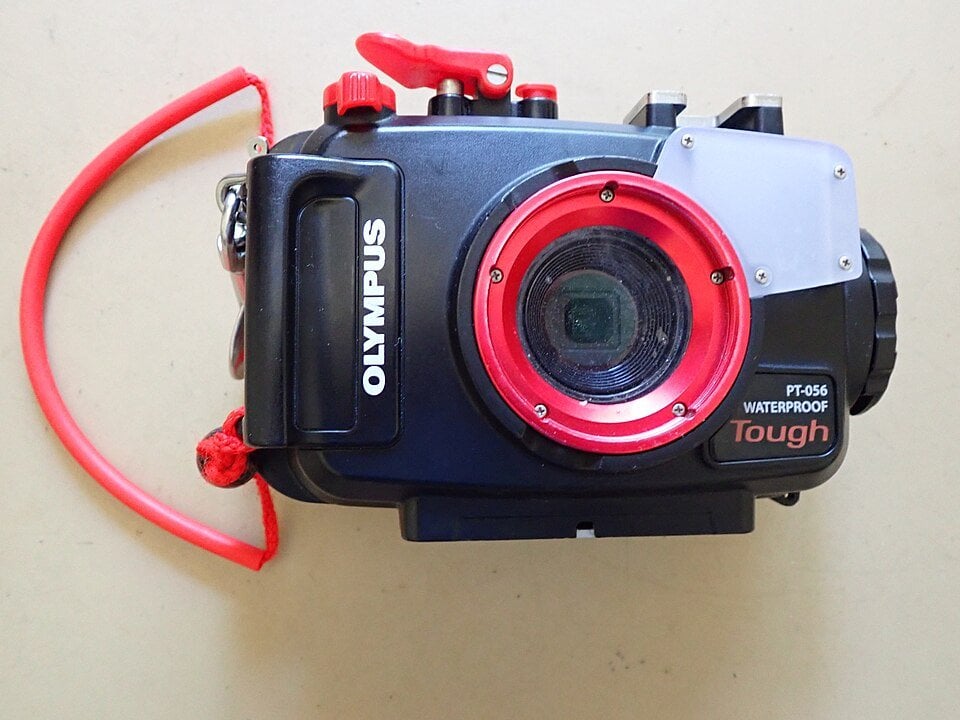
Camera types
| Type | Advantages | Disadvantages |
|---|---|---|
| Action camera | Small, robust, good-quality wide-angle video, moderate price | Little manual control, limited macro; a housing is often needed beyond a few metres |
| Waterproof compact (no housing) | Simple, always ready, good macro on some models | Limited depth (often about 15 m); a housing is recommended for deeper dives |
| Advanced compact in a housing | Very good quality, manual controls, wide-angle and macro converters | The housing and lighting push up the budget |
| Mirrorless or DSLR in a housing | Maximum quality, interchangeable lenses | Expensive, heavy, bulky; requires experience |
| Smartphone in a housing | No new camera, instant sharing | Depth depends on the housing, risk to the phone in case of a leak |
Always check the maximum depth stated by the manufacturer for the camera and for its housing, and choose a margin beyond your usual dives.
The housing
- Polycarbonate: light, transparent (you can see a leak), affordable.
- Aluminium: robust, more compact, for deep or intensive diving, more expensive.
- O-rings: inspect, clean and grease them according to the instructions before each dive.
- Leak alarm and vacuum system: detect a leak before you enter the water.
- Ports: flat for macro, dome for wide angle.
Lighting
| Lighting | Use | Key points |
|---|---|---|
| Video light (continuous light) | Video, macro, focusing aid | Power, beam angle, burn time, colour temperature |
| Strobe | Photo, freezing motion, vivid colours | Triggering by optical fibre or cable, power, recycle time |
| Red filter | Video in natural light at shallow depth | Inexpensive, ineffective at depth |
Move the lights away from the lens axis to limit lit-up particles ("backscatter").
Choosing for your diving
- Getting started: action camera or waterproof compact, with a small light or video light.
- Progressing in photography: advanced compact in a housing, one or two strobes or video lights, an articulated arm.
- Advanced practice: mirrorless camera in a housing, dedicated ports and lenses.
- Add a lanyard or a clip so you never lose the camera.
Photography must never make you forget safety: stay in contact with your buddy, monitor your dive computer and your air. Do not touch the bottom, do not move animals and limit the use of strobes on sensitive species.
Some manufacturers
Non-exhaustive list, in alphabetical order, with no ranking and no sponsored or affiliate links. Check the current range on each manufacturer's website.
| Manufacturer | Official website | Range |
|---|---|---|
| GoPro | gopro.com | Action cameras and housings |
| Ikelite | ikelite.com | Housings, strobes, video lights |
| Isotta | isotecnic.it | Housings, lighting |
| Nauticam | nauticam.com | Housings, ports, accessories |
| OM System | explore.omsystem.com | Waterproof compacts and housings |
| Paralenz | paralenz.com | Dive cameras |
| Sea & Sea | seaandsea.com | Housings, strobes |
| SeaLife | sealife-cameras.com | Cameras, housings, lighting |
Key takeaways
- Choose according to your subject (seascape, fish, macro), your budget and the bulk you accept.
- Check the maximum depth of the camera and the housing.
- Lighting matters more than the camera: a video light or strobe from a few metres down.
- Maintain the housing O-rings before each dive.
- Buoyancy and safety come before photography.
Further reading
The underwater photography guide gives shooting techniques and the rules for respecting the environment. In the app, your photos help identify species and remain linked to the dive session.
Sources
- FFESSM – Audiovisual committee · consulted on 9 November 2026
- DAN Europe – Divers Alert Network Europe · consulted on 9 November 2026
Related guides
Buying guides: getting equipped to dive
Where to start, buying or renting, trying on, new or used, budget and maintenance: the method shared by all the diving equipment buying guides.
Responsible underwater photography
Taking pictures without harming the environment or forgetting safety, the basics of underwater photography, identifiable photos and respecting privacy.
Discovering and respecting the underwater environment
Read a dive site, know the main environments, observe marine life without disturbing it and dive in an eco-friendly way.
Buying guide: accessories (knife, DSMB, weights, light)
Line cutter, DSMB and reel, weights, light, compass and whistle: what they are for, how to choose them and some manufacturers.