
Equipment
Buying guide: accessories (knife, DSMB, weights, light)
Line cutter, DSMB and reel, weights, light, compass and whistle: what they are for, how to choose them and some manufacturers.
For information only: it replaces neither training supervised by a qualified instructor nor medical advice.
In short
A few simple accessories complete your equipment: a tool to free yourself from a line, a DSMB to be seen at the surface, suitable weights, a light and, depending on the dive, a compass, a whistle or a spare mask. They are inexpensive but only useful if you take them on every dive, always stowed in the same place, and if you know how to use them. The safety accessories guide details how to use them.
Why it matters
A fishing line, surfacing far from the boat or a drop in visibility happen without warning. A well-chosen and well-stowed accessory turns these situations into simple incidents. Conversely, an accessory that dangles or snags becomes a problem in itself.
Diving accessories
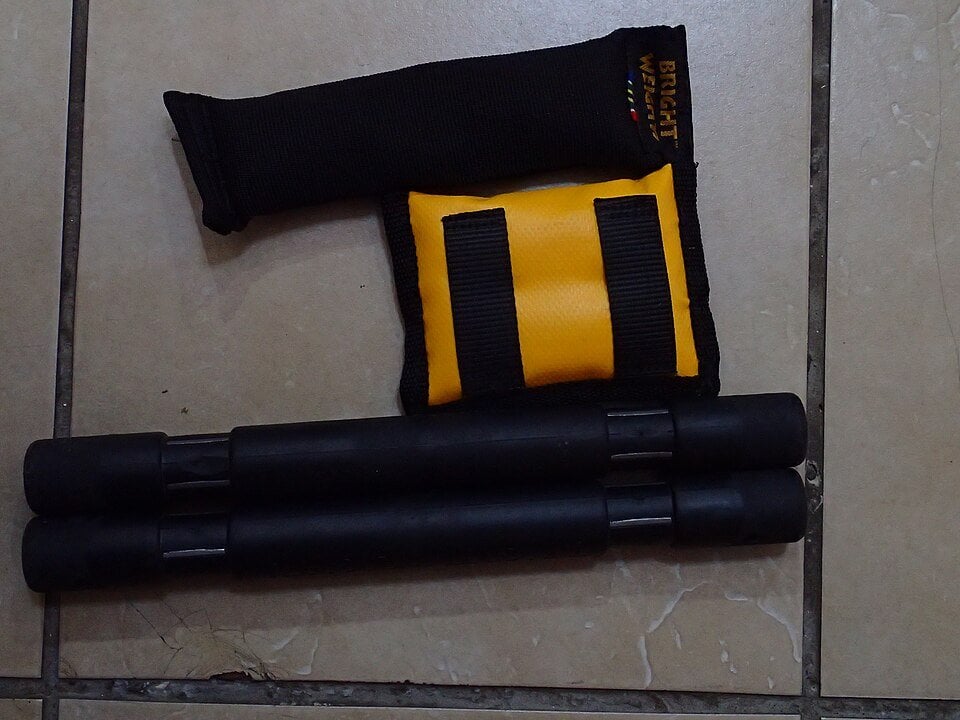
Knife and line cutter
| Type | Advantages | Disadvantages |
|---|---|---|
| Line cutter (protected hook blade) | Cuts lines and nets with one hand, no risk of injury, compact | Only cuts line |
| Small short-bladed knife | Versatile, attaches to the BCD or harness | Blade to protect and rinse |
| Large calf knife | Robust | Bulky, hard to reach, snags; of little use in recreational diving |
| Diving shears | Very effective on lines and ropes | Less robust, to rinse carefully |
- Attach the tool on your upper body (BCD, harness, waist strap), reachable with both hands.
- Prefer stainless steel or titanium, with a sheath that holds the blade without a fragile button.
- Check the local regulations on carrying and transporting blades.
DSMB and reel
- Delayed surface marker buoy (DSMB): bright colour (orange, yellow), long enough (at least about 1 m) to be seen from afar, with an overpressure valve and an inflation system suited to your training.
- Reel or spool: a spool is compact and simple; a ratchet reel is more practical for long lengths. Carry more line than the depth of your stops.
- A closed DSMB stays inflated at the surface even when knocked flat by the swell.
Weights
| System | Advantages | Disadvantages |
|---|---|---|
| Weight belt | Simple, affordable, can be dropped with one hand | Can twist or slip; puts load on the lower back |
| Pocket belt (soft shot weights) | More comfortable, does not hurt | Pockets wear out; bulkier |
| Integrated weights in the BCD | No more belt, weight on the BCD | Check the release; the distribution changes your trim |
| Cylinder or backplate weights | Adjust trim without being dropped | Not ditchable: complete them with ditchable weights |
Buy weights in small increments (500 g to 2 kg) for fine adjustment; the weighting guide explains how to find the right amount.
Light
- Primary light: wide beam for night diving, narrow beam for wrecks and caverns; burn time longer than the dive with a margin.
- Backup light: small, reliable, always in a pocket for night or wreck diving.
- Battery: rechargeable (practical) or disposable batteries (easy to find when travelling); check the rules for lithium batteries on flights.
- For photo and video, choose dedicated lighting (see the underwater camera buying guide).
Compass, whistle and small accessories
- Wrist or console compass, readable and damped; some dive computers have a digital compass.
- Whistle or audible signalling device attached to the inflator hose, to be heard at the surface.
- A spare mask folded in a pocket, a slate to communicate, clips to attach accessories so they do not dangle.
Some manufacturers
Non-exhaustive list, in alphabetical order, with no ranking and no sponsored or affiliate links. Most general manufacturers offer these accessories; check the current range on their website.
| Manufacturer | Official website | Range |
|---|---|---|
| Apeks | apeksdiving.com | Technical accessories |
| Aqualung | aqualung.com | Generalist |
| Beuchat | beuchat.fr | Generalist |
| Cressi | cressi.com | Generalist |
| Halcyon | halcyon.net | Lights, DSMBs, reels |
| Mares | mares.com | Generalist |
| Scubapro | scubapro.com | Generalist |
| Seac | seacsub.com | Generalist |
| Tusa | tusa.com | Generalist |
Key takeaways
- A line cutter or small knife on your upper body, reachable with both hands.
- A brightly coloured DSMB, with a reel or spool of sufficient length.
- Weights in small increments to fine-tune your weighting; part of the weight must remain ditchable.
- A primary light and a backup light for night and wreck dives.
- Each accessory has its place and comes on every dive.
Further reading
The guides on safety accessories, weighting, navigation and surface communication explain how to use this equipment. Practise deploying the DSMB with your instructor.
Sources
- French Sports Code – Scuba diving (articles A322-71 onwards), Légifrance · consulted on 9 November 2026
- DAN Europe – Divers Alert Network Europe · consulted on 9 November 2026
- FFESSM – French Federation for Underwater Studies and Sports · consulted on 9 November 2026
Related guides
Buying guides: getting equipped to dive
Where to start, buying or renting, trying on, new or used, budget and maintenance: the method shared by all the diving equipment buying guides.
Safety accessories
Surface marker buoy and reel, lights, line cutter, whistle, mirror and signalling device: what they are for, when to use them and where to attach them.
Weighting and buoyancy
Archimedes' principle, finding the right weight, belt or integrated weights, buoyancy control with the BCD and the lungs, and the risks of poor weighting.
Underwater navigation
Preparing your navigation, using natural landmarks and the compass, estimating distances, and what to do when in doubt.
Communicating at the surface and at night
Signals to the boat, light signals, sound signals and ways of being spotted, and how to organise communication at the briefing.